The Top 4 Mental Health Trends Shaping 2026 (Including One Controversial Shift)
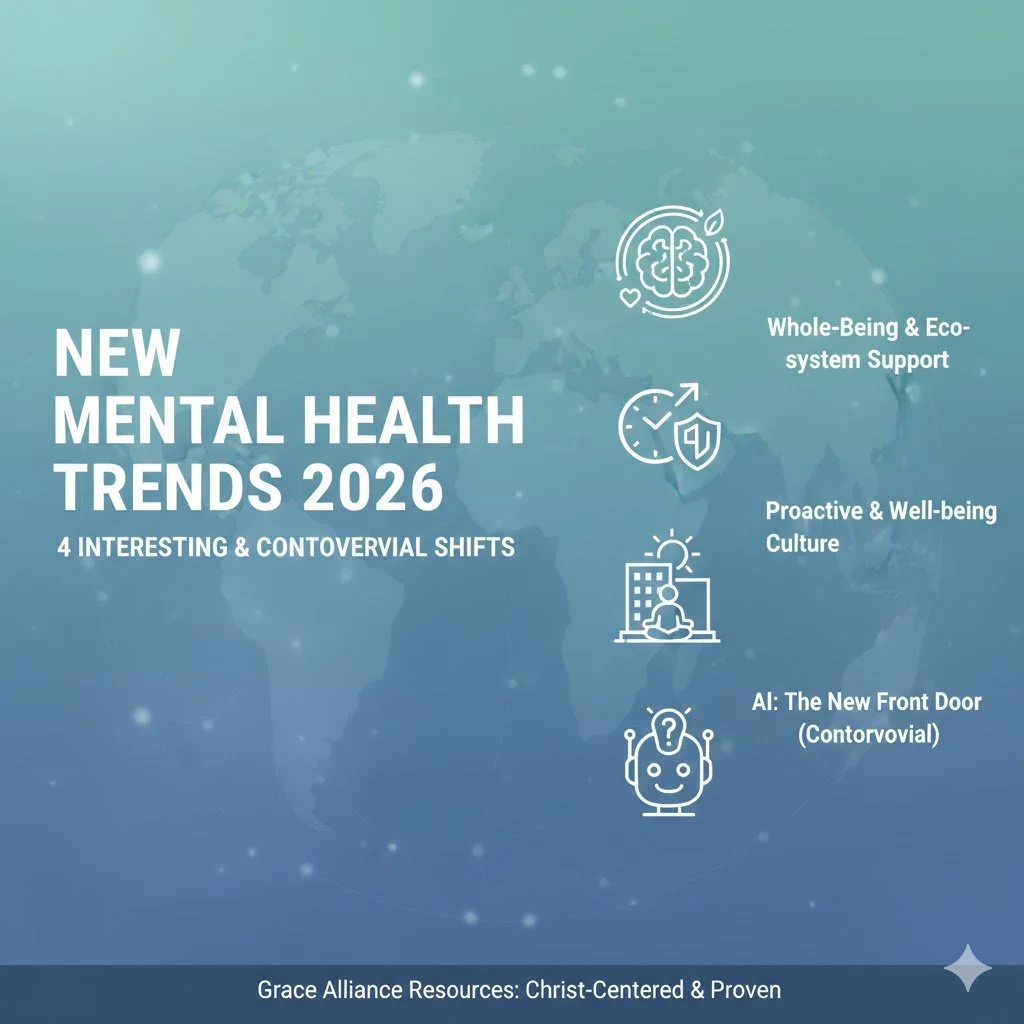
There are already new mental health trends in 2026! There are many, but here are just four interesting new trends taking shape ... even controversial!
1. Reframing mental health to whole-being language with broader eco-system support.
Among others (WHO), the National Academies report that mental health continues to increase and call for broader interventions. The new language is "mental, emotional, and behavioral well-being (MEB well-being)." Rightly, as they define it as a whole-being challenge. In their long study report, they advocate for evidence-based collaborative intervention models that help create new community eco-systems of care (including community groups like our evidence-based groups).
Read more >
2. The new care model is proactive than reactive.
Intermittent therapy has traditionally been episodic care (help when life is falling apart), but the trend is moving therapy and other support structures to more "ongoing" or "always-on" care. This model has 60% better mental health outcomes and saves thousands of dollars personally and corporately!
Read more >
3. Workplace "well-being" is the new answer to mental health.
Over 65% of workers reported feeling burned out in 2025, while stigma remains (with almost 44% saying that they wouldn't reach out for help). One of the most popular articles (research) for the McKinsey Health Institute in 2025 was "mental health well-being" in the workplace. The workplace (and church) is more about a culture of well-being, rather than trying to create a mental health "stigma-free" environment (studies show "stigma-free" campaigns increase stigma in the workplace - same with the church).
Read more >
4. AI is the new "mental health" front door ... and controversial.
OpenAI reports that 40 million people ask ChatGPT health questions every day. Another report shows that almost 50% of adults have used AI for mental health support.
Controversial ... with valid concerns, as some reports show AI dependency causes a cognitive decline and atrophy (poor critical thinking and memory recall). Then, there is the "AI delusion," where someone blindly follows AI's algorithm output instead of their own logic or moral reasoning. This has much to do with AI's sycophant design, which is unhealthy for anyone (even in real human relationships). As I’ve heard experts say, though they are good and can be extremely helpful and productive, AI, or LLMs, are flawed and can get it wrong because they don’t have “experience,” only building from abstract information. - So much more, but a topic for another day!
Constructive… BUT it's in how some are pioneering and leveraging AI (with more constructive controls) to intervene to help people in need. Like Alabama's "CredibleMind" and Uganda implementing AI mental health support to create a new, easy, and safe front door entrance (and Uganda being faced with a shortage of mental health workers).
What's interesting is that, outside of AI, our resources, workbooks, and groups have been providing these types of Christ-centered and proven solutions for years. We're privileged to be part of the global shift.
Now, what do you think about these new trends? Your feedback is always welcome.
* * *
P.S. If you, your church, or organization are looking to implement simple Christ-centered mental health support with proven results, consider our free workbooks and groups. This is an oldie, but a goodie, 30 min. webinar explaining all the details about our groups.
Joe Padilla | Grace Alliance
This article is free. So is everything else we offer.
Help us keep everything free for individuals and churches who can't afford to pay.